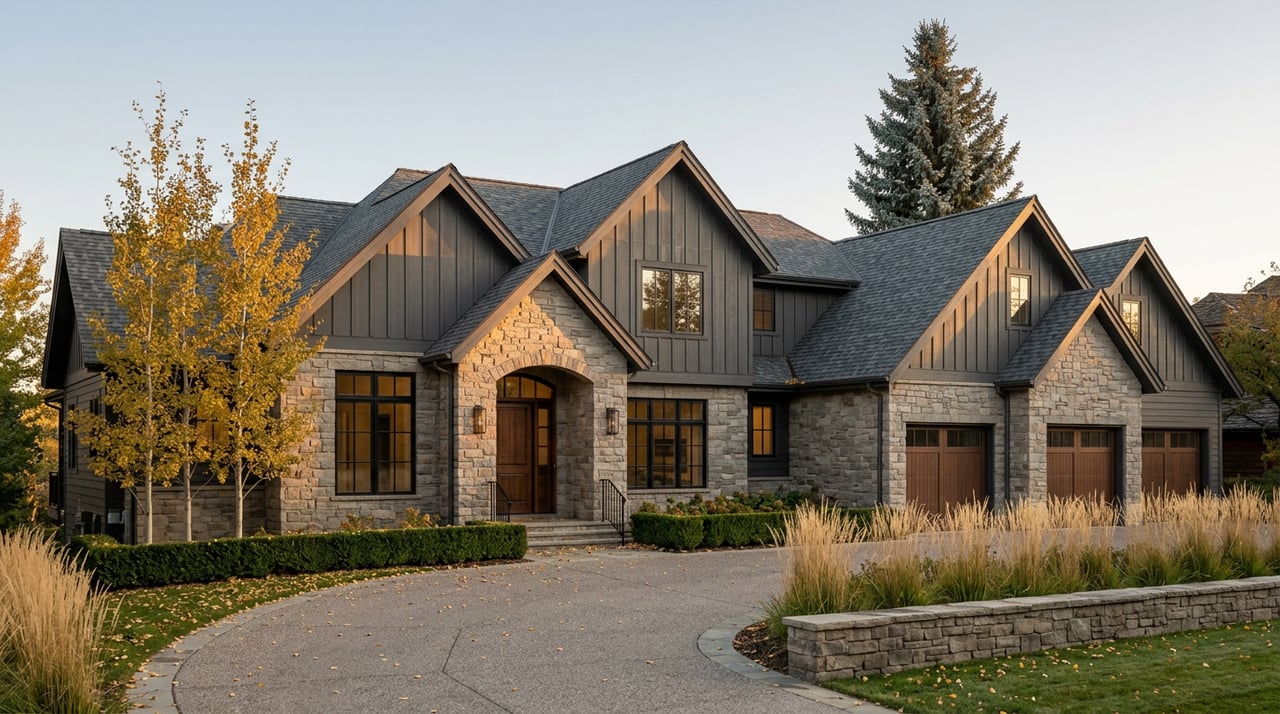
Picture closing on a place in Deer Valley in June. The inspection went smoothly, the financing cleared, and you spent the summer breaking in the new kitchen. Then in November, a notice from the Summit County Treasurer lands in the mailbox, and the number on it is nearly double what you budgeted for.
This isn't a billing error. It's the mechanism working exactly as designed, and it catches out-of-state buyers more often than almost anything else in a Park City closing.
The 55 Percent Rule Nobody Explains Clearly
The Utah County Assessor says Utah's constitution has allowed a primary residential property tax exemption since 1982. The Utah State Tax Commission explains that if a home is your primary residence, occupied by you or a full-time tenant, the county only taxes 55 percent of its market value. The other 45 percent is exempt, permanently, as long as the home keeps qualifying.
A second home gets none of that. It's taxed on 100 percent of market value. Same house, same street, same school district levy. The difference is entirely about who lives there and for how long.
That single rule is why two neighbors in the same Park City subdivision can carry very different tax bills on comparably valued homes, and it's why the "low tax rate" Utah is known for only tells half the story for a buyer who isn't relocating full time.
What That Actually Looks Like on a $5 Million Home
Numbers make this concrete faster than percentages do. Using a representative effective rate for Summit County of roughly 0.39 percent, here's what the exemption is worth on a $5 million property:
| Taxable value | Effective rate | Estimated annual tax | |
|---|---|---|---|
| Primary residence | $2.75M (55% of value) | ~0.39% | ~$10,725 |
| Second home | $5.0M (100% of value) | ~0.39% | ~$19,500 |
That's roughly $8,800 more per year for the identical house, simply because it's classified as a vacation property instead of a primary residence. Scale that up or down and the ratio holds: a second home in Park City typically runs close to double what the same property would cost a full-time owner.
Summit County's headline rate is genuinely one of the lowest in Utah, largely because home values here are so high that the tax base spreads wide. The exemption reduces the taxable value of a primary residence, not the tax rate. A second-home buyer gets that same rate applied to the full value, which is a meaningfully different bill.
2026 Assessment Notices and Appeals
Summit County mailed 2026 Notices of Valuation in July, and the increases in several of Park City's higher-end communities were unusually steep. According to a Pinion Newswire press release, owners in Empire Pass, Promontory, the Waldorf Astoria Park City, The Canyons, Deer Crest, and Hideout saw assessments climb by wide margins this cycle, in some cases 30 to 60 percent in a single year. A number of owners received notices that valued their property above what they'd actually paid for it as recently as December 2024.
The appeal window that followed those notices closed last week, on September 15, 2026, according to the Summit County Treasurer. That deadline covered both market-value appeals and primary residence exemption applications, which is worth sitting with for a moment: if you bought this year and didn't file for the exemption by that date, you're very likely paying tax on the full, unexempted value for the entire 2026 tax year regardless of how you actually use the home.
A local property tax consultant, quoted in a Pinion Newswire press release, described the standard this way: "an assessment is supposed to reflect what a property would actually sell for on January 1." That distinction mattered in several 2026 cases. A square footage error at a residence in Empire Pass got corrected after the recorded number exceeded what was actually on the plat. More than 30 hotel-managed condominium owners at the Waldorf Astoria challenged notices that came in well above recent resale prices for comparable units. These disputes show why it can be useful to compare a notice with the county record.
The Occupancy Test Buyers Get Wrong
The exemption isn't about intent or affection for the house. Summit County applies a specific, checkable test:
- Occupancy for 183 or more consecutive days in the year, by you or by a single long-term tenant who lives there year-round
- An actual application filed with the Summit County Assessor's Office, since the exemption is never automatic on a new purchase
Zoning Adds a Second Layer
Where a property sits also determines whether short-term rental income is even legally available, separate from the tax question entirely. In unincorporated Summit County, including the Snyderville Basin, the Summit County Clerk's Office requires a nightly rental license for short-term rentals.
If rental income is part of your math on a purchase, that's a conversation to have before you write an offer, not after you own the place. A home that looks like a natural vacation rental on paper can be zoned in a way that makes that plan illegal.
Before You Write the Offer
A few things worth confirming while you still have leverage in a negotiation:
- Ask for the seller's most recent tax bill and whether it reflects a primary or secondary classification. The exemption does not transfer automatically to a new owner, so the number on last year's bill may not predict yours.
- Pull the current Notice of Valuation for the parcel directly from the Summit County Assessor rather than relying on a listing sheet, especially for anything purchased or under contract in a reassessment year like 2026.
- If you intend to occupy the home full time, plan to file the Residential Property Declaration promptly after closing, since the September 15 window for that year's exemption will not wait for a slow move-in.
- If nightly rental income is part of the plan, confirm the specific zoning for that parcel, not just the general reputation of the neighborhood.
What Park City Doesn't Charge
It's worth balancing this out. Summit County closings tend to run leaner than what buyers from states like California or New York expect, without the attorney-driven closing costs common elsewhere. The annual carrying cost on a second home here is real, but the transaction itself stays comparatively straightforward.
A Few Common Questions
Does the primary residence exemption transfer when I buy a home that already had it? No. A new owner has to file their own application with the county assessor. The exemption resets at the point of sale.
I missed the September 15, 2026 deadline. What now? The 2026 window has closed. The next opportunity opens when valuation notices are mailed, with a deadline for that year's exemption and any appeal.
Is the low Summit County tax rate real, or misleading? Both things are true. The effective rate is genuinely low compared to most of the country. Owner-occupants also get the 45 percent exemption; a second home simply doesn't get that discount, so the effective cost for a vacation property runs close to double.
Property tax classification is one of the few parts of a Park City purchase that rewards getting the paperwork right early. I'd rather walk you through this before you're under contract than have you discover it in a November envelope.
If you're weighing a purchase in Park City, Deer Valley, or anywhere in the Wasatch Back, Whitney Foley can help you understand what a specific property will actually cost to own, not just what it costs to buy. Let's find your perfect property.
This article is general information, not legal, tax or financial advice. Consult a qualified professional about your situation.